

Restoring North Eden Creek
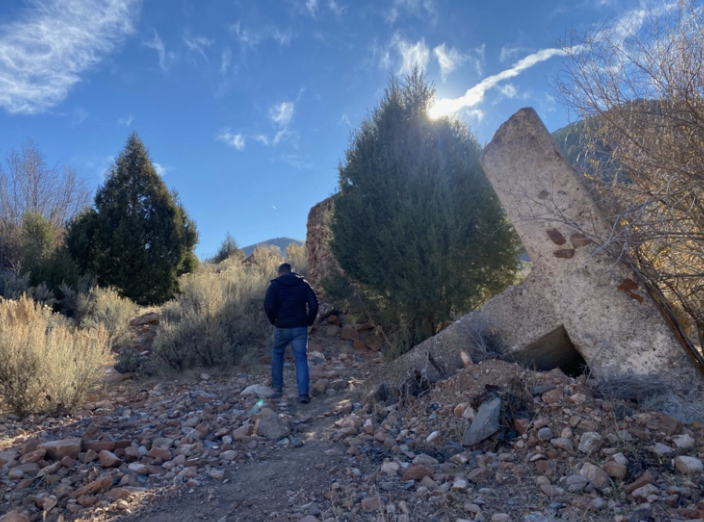
Michael Nebeker walks through the valley that used to be under water, a place that seems to have long been forgotten. He pauses to imagine what the land looked like before his grandfather purchased it in 1888, before two dams were constructed in the mid-1940s. The dams created a series of reservoirs that became a place for family gatherings and recreation. However, the drastic change to the landscape impacted vital overwintering habitat for mule deer, altered vegetation and food availability, and displaced sage grouse. Most significantly, it affected one of the last remaining native lake populations of Bonneville Cutthroat Trout. Nebeker has since played a role in early efforts to restore the ecosystem, motivated by a desire to right a family legacy and return the canyon to something closer to its original state.
A Changed Landscape
Nebeker is one of more than 100 stakeholders connected to North Eden Creek, located in North Eden Canyon on the east side of Bear Lake, a large natural lake on the Utah–Idaho border. His family has owned the land since 1888, and for generations it served as a place for recreation and connection. “A lot of memories were made there, we fished there all the time, but we had no idea the ecological impact it had, or what was to come,” Nebeker said.
In 1979, an unusually high-water event caused by rapid snowmelt and heavy rain overwhelmed the dam system. Both reservoirs failed, releasing a massive flood that reshaped the valley. The aftermath left behind large stone remnants, washed-out roads, and a valley bottom that resembled a barren, degraded landscape rather than a functioning ecosystem.
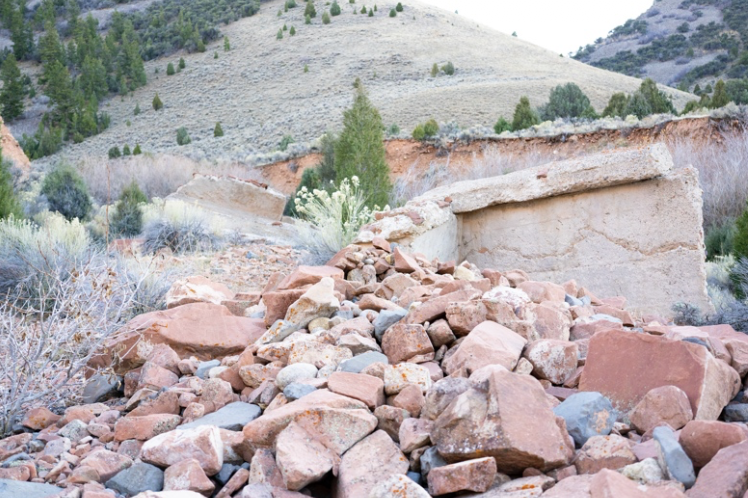
Remains of the original dam structure in North Eden Canyon.
A Complicated Recovery
Little restoration occurred following the dam failure. The area was considered high risk, and rebuilding infrastructure was cost-prohibitive. Over time, the valley bottom transitioned to grazing land, with grasses replacing native sagebrush communities. This shift reduced habitat quality for species like sage grouse and mule deer, which rely on native vegetation for cover and forage.
Jim DeRito, a fisheries restoration coordinator with Trout Unlimited, has spent the past several years working to rehabilitate North Eden Creek and the surrounding valley. His efforts have focused on reconnecting the stream system, but progress has been slowed by the complexity of coordinating among numerous stakeholders, each with different priorities and interests.
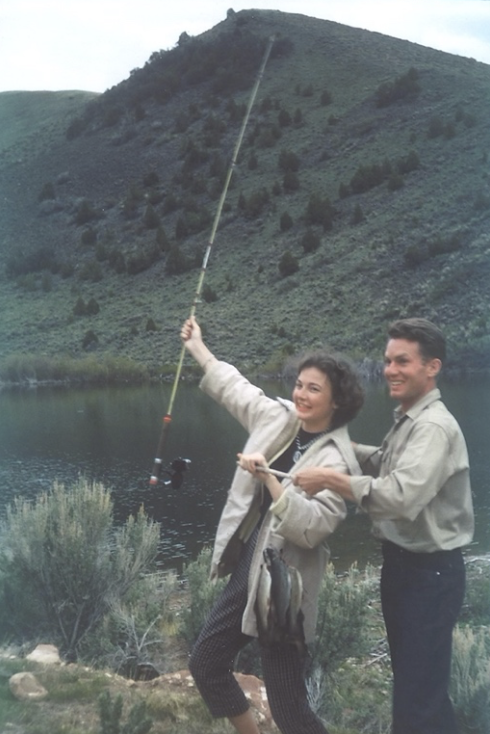
Historical photo of the Conrad and Carolyn Nebeker, whose connection to the canyon spans generations.
Restoring Connectivity
One of the primary barriers to restoration is a perched culvert located near the mouth of the creek. Positioned approximately four and a half feet above the streambed, the culvert prevents fish from migrating upstream, limiting access to critical spawning habitat.
With the support of Nebeker and other stakeholders, plans are underway to replace the culvert with a bridge, restoring natural stream function and reconnecting the creek to Bear Lake. The project is scheduled to begin in spring 2024 and represents a key step toward restoring ecological processes in the system.
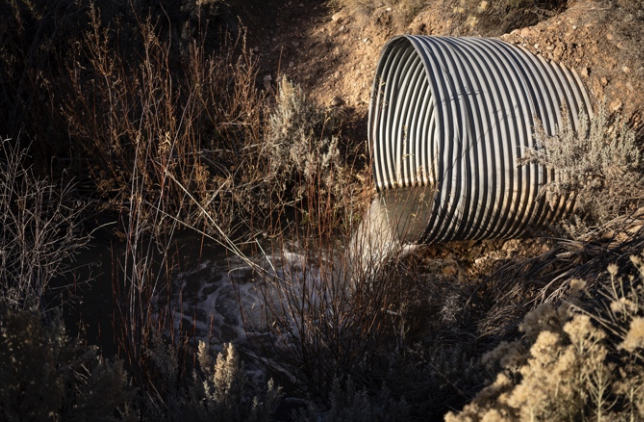
The perched culvert that currently blocks fish migration in North Eden Creek.
Why It Matters
Historically, North Eden Creek provided access to an estimated 10 to 18 miles of spawning habitat, depending on seasonal flows. Today, it is one of only four tributaries supporting spawning habitat for the Bear Lake population of Bonneville Cutthroat Trout. Each mile of accessible stream is critical to maintaining a healthy, self-sustaining population.
According to Bear Lake fisheries biologist Emily Wright, wild Bonneville Cutthroat Trout made up less than 10% of the population prior to 2002. Through sustained conservation efforts, that number has increased to over 50%. “With all the work that has gone into Bear Lake tributaries, natural reproduction of cutthroat trout has increased, and we have a very healthy trout population,” Wright said.
Projects like this represent more than restoration—they reconnect fragmented habitats, support native species, and reflect a broader commitment to long-term conservation.
Project Details
Location: North Eden Creek, Bear Lake (UT/ID)
Organization: Trout Unlimited and partners
Year: 2024
